Renewal 2022
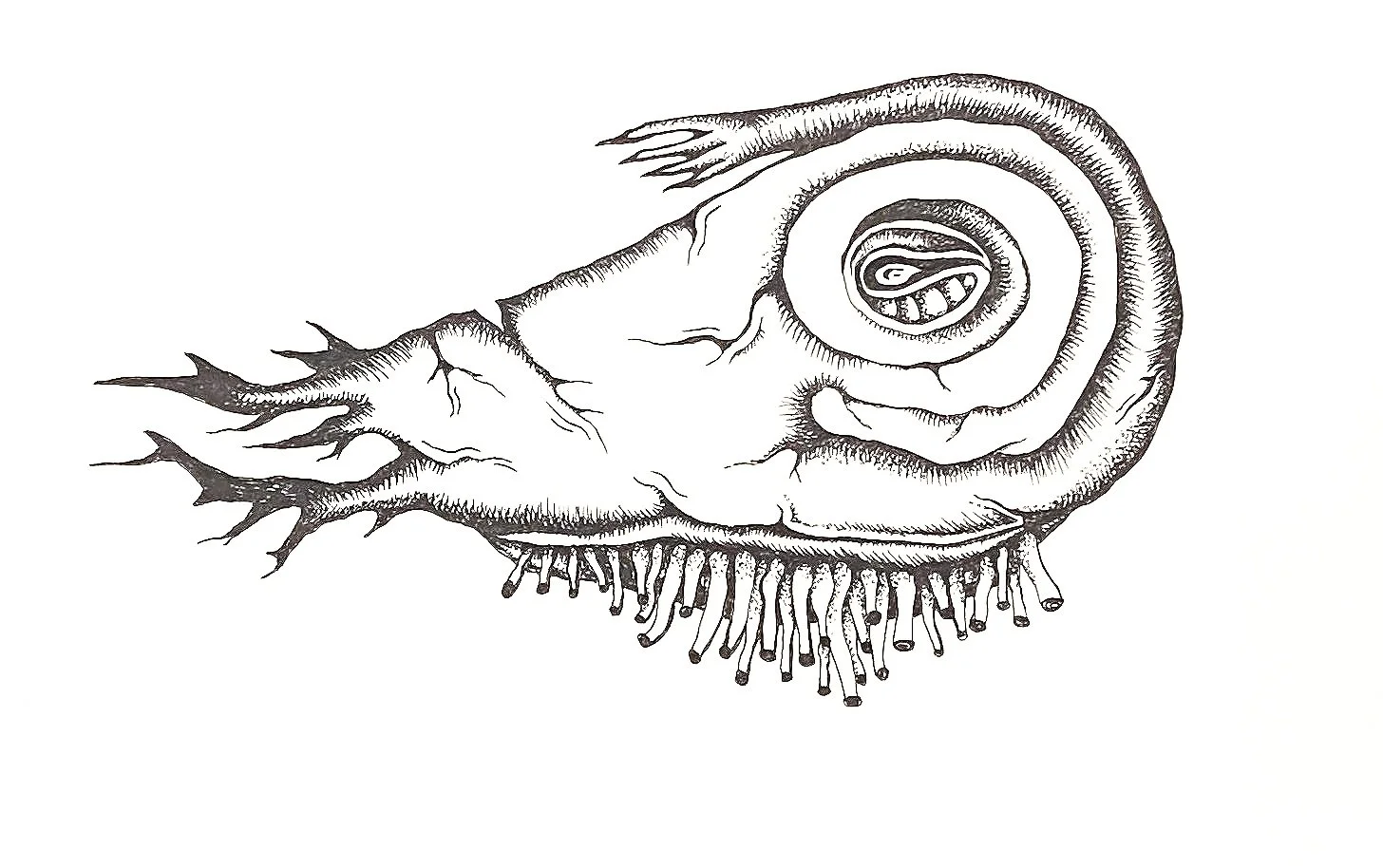
Half-ish heart sketch
Between the holidays and reunions with my family after a long covid hiatus, and the weather and a lot of school (CMS and LJMU) projects that need my attention and my amazing organizational skills (har har), my wintery studio practice has been mostly drawing… the gateway drug to mosaics and sculpture and ceramics. I write and draw and sort out my intentions and ideas before going ahead and moving into a physical medium like clay or carving a sculpture for a mosaic form. Much of my sketching happens directly in clay - incised and carved to flat slabs that are my earthy journals, I also create them on handmade forms such as bowls or small weird irregular little dishes if I have extra rolled out raw clay pieces. I don't like anything to be wasted. Mottainai. These extraneous scraps should be must be used in some way, like the smashed pieces that they might become.day or centuries from now. I work out a lot of my drawings on these forms and odd pieces of clay… they are easy to handle while I inscribe them. Maybe I'll use them later in a mosaic sculpture or panel. Or maybe I’ll give them away. The idea of not wanting to waste or be frivolous is something that connects me to both my birth mother, Gilda, and my adopted grandmother, Jane. Both women were frugal due to their economic circumstances and hoarded things like soap, light bulbs, bags and also cans of soup. Gilda learned from scavenging during WWII and later on from living homeless in the streets of Houston. Jane became penurious living through the Depression in America in the 1930’s. This mentality came from their experiences of loss and stocking up in case a crisis should arise again. They both communicated to me that waste is a horrible thing - stash goods if you find what you need because you may need it later. and won’t be able to get it.
I realize in my art practice there's a part of me that has built an inventory of materials in my studio… materials that some may deem garbage. Using these parts, things, scraps and swatches and recycled stuff challenges me to find its purpose, its beauty. its place. It is a challenge to transform (not garbage or landfill) material and give it meaning or purpose. For these reasons my practice has evolved also in the way I use the raw clay pieces, wet and dry, cut into a shape purposefully or just a blob.. Upon these scraps come notes or drawings. Sometimes these drawings become utilitarian - plate-like mis-shapenned bowls that no one really wants to eat out of because there’s strange little story or drawing inside. That these clay sketches are useful in this way (and might be more loved than a scribble on a piece of paper tacked to a wall) gives me some sort of comfort. I am compelled to save the shards and reinvent them, mend them into a new existence. This methodical, ritualistic process is how I can repair myself and my broken family and the world if possible. I have an ongoing narrative in my scribble drawings, clippings, shards…they are fertile mothergoddesses, luxuriously swollen voluptuous wombs full and barren, engorged breasts dry, emptied and heartbroken. These images are part of an autoethnography of the adoption culture - representing maternal icons such as my mother who gave birth to me and the mother who raised me and who could not give birth herself. These two amazing specific women are much alike yet so different in their histories and personal entanglements. There is suffering in both mothers; their wombs emptied because of adverse circumstances. SEPARATIONS.
My latest rewrite for LJMU progress approval. The more I tweak it the ideas and questions get clearer ….
The aim of my practice and research-based PhD thesis is to examine mosaic art as a specific and critical practice. I will explore how connections to materials influence how an art-making practice is considered and theorized and practiced. Because of my expertise as a mosaic artist, educator and curator, I will bring a new perspective which will allow my research and evaluation to make an original contribution to this field of study.
The concept of brokenness cannot be fully understood without knowing the meaning of perfection- or un-brokenness. I will consider whether Kintsugi, a Japanese philosophy of mending and renewal, can be applied to mosaic art methodology in form and practice. I am creating a base of research subject materials, gather relevant readings, articles, published interviews and artworks.
Within the practice-based PhD requirement, my goal is to develop, document and create a body of work to culminate in an exhibition (installation) and catalogue. The exhibition will feature a series of fragmented narrative drawings on broken ceramic serving as blueprints for final sculptural mosaic artworks. The first series will address matriarchal survivalism and the generational trauma of my ancestry, dating from the holocaust to the present. The works will describe the deconstruction and repair of families subjugated to fascism, systems of dependency, and submission. These narratives will evolve through the reordering of broken pieces, exposing reinterpreted artifacts - impressions of the scars of time and testimony. My studio practice is materially and methodically oriented, a process that encompasses gathering, creating materials, organizing and composing. The artworks will be the result of a practice in drawing, ceramic making, texts, carving and sculpture.
Recent research in mosaic art reveals a resurgence of interest in the field. Two examples are, A. Pantic, “Creative Practice of Mosaic Art, The Heritage Within” (2018), and M. DeMelo, “Mosaic as an Experimental System”(2019). However the focus of these studies differs from studio and experiential approaches to this knowledge. These studies have missed the importance and value of understanding mosaic art as a critical contemporary art practice. Additionally, in the last 30 years a growing demand for structural and academic oriented education in this field reflects a renewed interest in the emergence of mosaic art schools worldwide, reflecting a renewed interest in this medium. Within my established art practice I will provide original insights that illustrate how the specialized methodologies of mosaic art are connected to the ideologies of Kintsugi and the aesthetic practices of Wabi Sabi.
Through my research, I will consider how the mosaic process is a means to connect voice and vision to see possibility (hope) in a damaged world. I will provide documentation of my studio process by recording of data through journaling, time lapse photography and video. The time lapse documentation will provide opportunities for in-depth analysis of the step by step construction and decision-making processes within the art studio. Theories of conceptual brokenness and analysis of collected data will result in a 40,000-word thesis, an exhibition installation and catalog. I will complete my proposed research dissertation and present an art exhibition with a catalog in 2024.
Resources for my research proposal will include observations and interviews of practitioners who employ fracturing and rebuilding as part of their process of mosaic making. Shards are fragments of an event, a transformation; each piece holds a memory like a scar. I will explore how Kintsugi, a philosophy of embracing the flawed and nostalgic as a means of rehabilitating our perceptions is related to contemporary mosaic art practices. Wabi-Sabi, the aesthetic practice closely aligned with Zen Buddhism, encourages thei rregular and asymmetric to be embraced to expose true beauty and true freedom. In The Unknown Craftsman, Soetsi Yanagi writes, “... it is “the beauty of the perfect and the beauty that deliberately rejects the perfect”. This ethos that embraces flaws and organic nature (both similarly hidden and well defined) connects to mosaic practice, reflecting a catharsis of repair. Artmaking through a deconstruct/reconstruct framework and the process of art storytelling through mosaic, and repairing the broken is both a purge and purification.
My resources include twentieth-century French philosopher Gabriel Marcel and his theories of the existential condition of man in the broken world, specifically through Sam Keen’s interpretation that hope and love are responses to despair as theoretical support for specific context of artmaking. Scholar Marianne Hirsch’s “The Generation of Post Memory- Writing and Visual Culture After the Holocaust” (2012) is a resource that references how surviving and processing generational trauma through creativity (and the transmission of intergenerational traumatic imagery) can be understood through stories, art, and behavior. Additionally, psychotherapist Nancy Verrier’s groundbreaking book on adoption, “The Primal Wound”(2003), is a contextual reference for concepts of loss, the pain of abandonment and separation at birth. The ‘break’ of separation trauma, this damage to the maternal spirit is a fragmentation of natural lineage and identity. I will also provide observational research on selected contemporary mosaic art practitioners and evaluate their individual methodologies and the thread (or breaking) that connects them.
My research on mosaic will consider the outcomes of this unique process and how they dispel the implicit assumptions, ideas, and frameworks of “craft-oriented” mediums. As an experienced practitioner in the field, this is what fascinates me; the weight of the process (hunting, gathering, organizing, composing, adapting, mending), and the objects that are created within contexts of contemporary art. My proposal subject is original and will make a valuable contribution to understanding of this specific art form and give new perspective to an original process of art making. With an established art practice of my own, I have a full studio with light, equipment, worktables, kilns and materials needed to create work for my proposal. I have full access to The Chicago Mosaic School and its library and gallery. I will be purchasing video equipment for time lapse studio documentation. Additionally I will be looking into funding and grants to supplement travel and housing costs for some of the program.
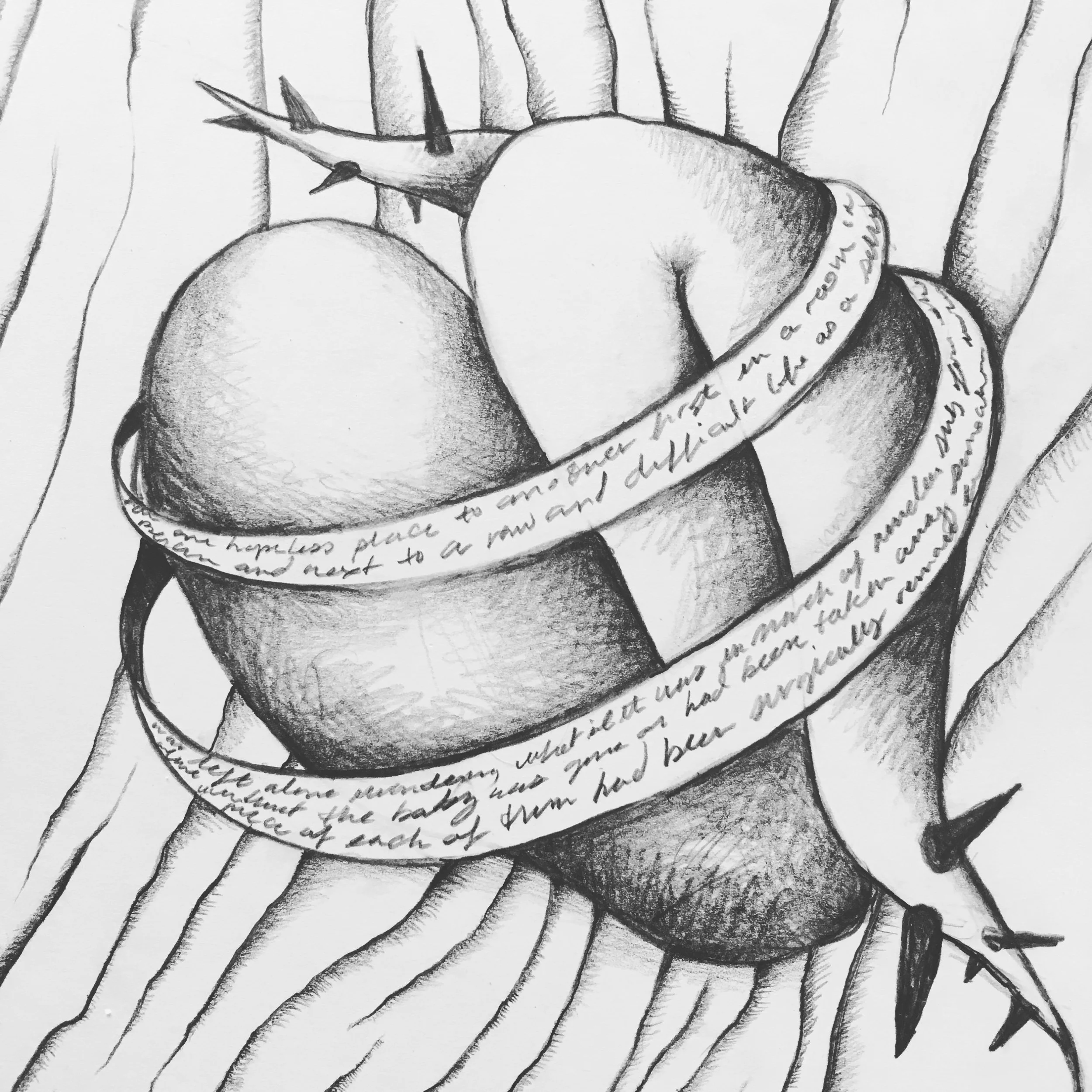
Father, not Dad, Pencil on Paper - my birth father, a man who denied me until 3 years ago (he was sorry), passed away last week.
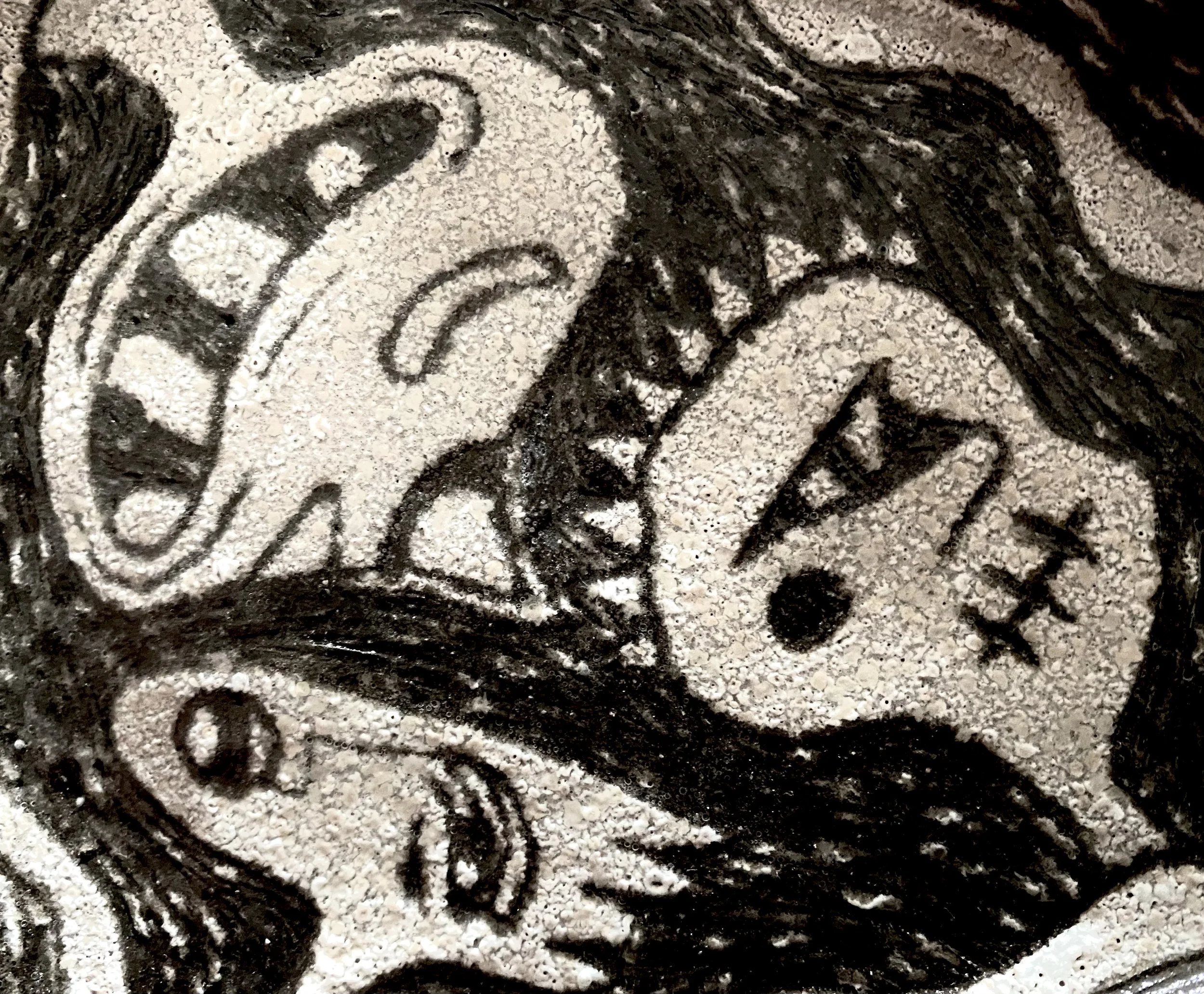
fragment of clay drawing in preparation for a mosaic piece titled inheritance
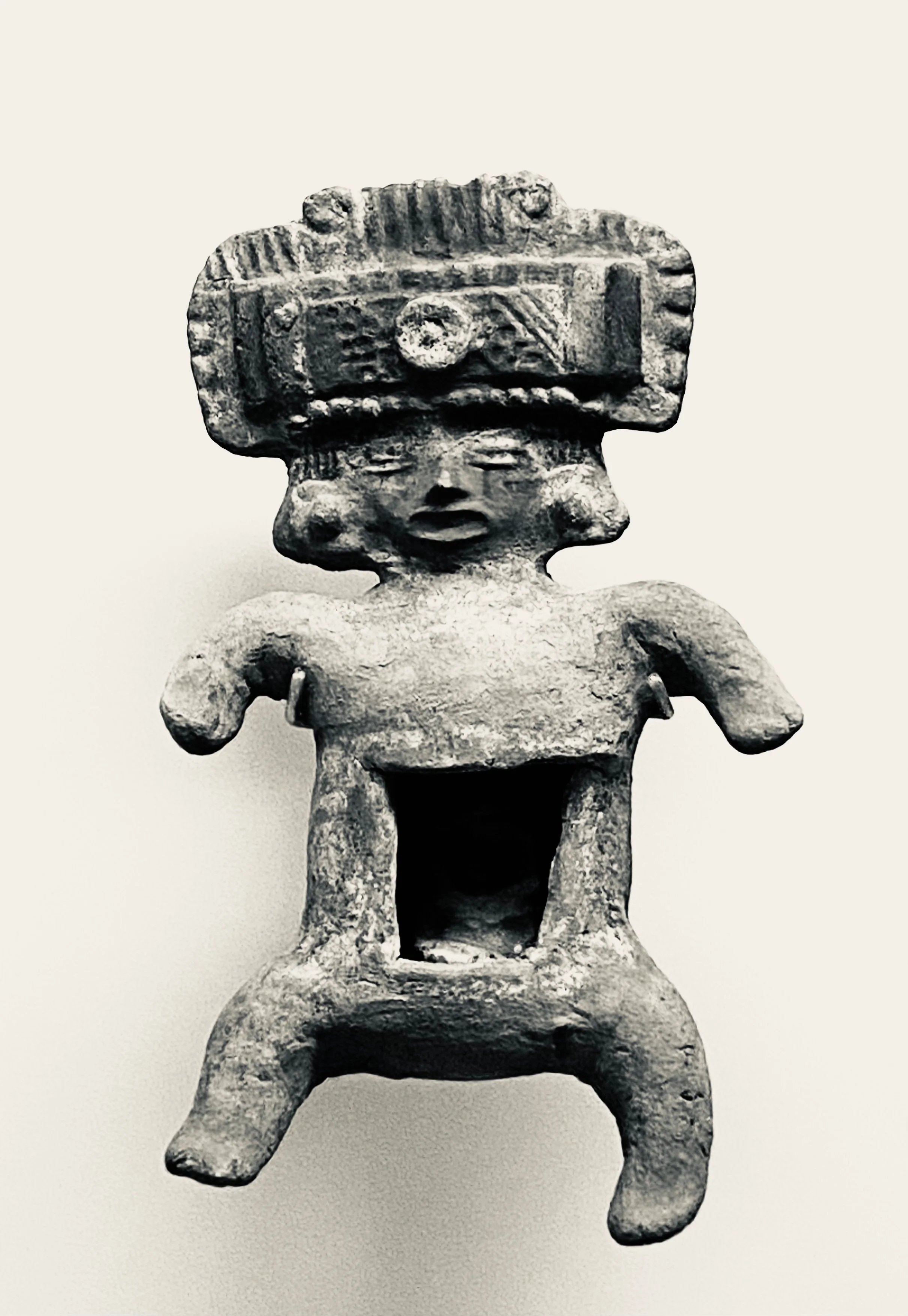
Teotihuacan, Hollow figure, 100 BCE, Museo Nacional de Antropología, CDMXReading Blog 1/22
Sound and Music. So relevant to this particular life and process.
My sons - all three - musicians and me -mosaic. They use thousands of notes to compose (for me it is the tessera, or pieces in composition). The meaning of the work relaies on how one note, one sound, one shard or piece relates to or is lead or followed by another note. A symphony of parts. The root of "mosaic" is the Medieval Latin "musaicum," meaning "work of the Muses," itself ultimately from the Latin "Musa," or "Muse” (https://www.balashon.com/2006/02/mosaic) , like music and also , museum.
John Cage: on Experimental Music: Hearing everyday sounds or these sounds as music or compositional elements for music “changes the perception” about both sounds and music and how we hear, what we hear .and how we hear it. In art and writing and music and dance there are considerations of technique and formal structure which connects us to a lineage, a system of organization…a “principle of form”. Silence IS sound just as the role of the interstices, the quiet inbetween in a mosaic, those spaces give one the opportunity to rest eyes and perhaps, ponder. Experimentation comes with using existing technologies or not, to see (hear, listen to) sounds in the shadows, the mundane, reframing Experimentation “is an act not to be later judged in terms of success and failure but simply as of an act the outcome of which is unknown.” Give attention to the activity of sounds.
Hearing sounds or sounds as music or compositional elements for music changes the perception about sounds and music. The principle of form will be our only connection with the past quote Through the principle of Organization in man's ability to think. Silence as sound just as the interstices in a mosaic, the quiet spaces in between give ones the opportunity to rest my eyes or thought. Give attention to the activity of sounds.
“What is the purpose of writing music? One is, of course, not dealing with the purposes but dealing with sounds. Or the answer must take the form of paradox; a purposeful purpose Lesnar's or a purpose list play. This play however, is an affirmation of life-not an attempt to bring order out of Chaos nor to suggest improvements in creation, but simply a way of waking up to the very life we're living, which is so excellent once one gets one's mind and one's desires out of its way unless it Act of its own accord. “
Experimental, in John Cage's words, is that it is an act not to be later judged in terms of success and failure but simply as of an act the outcome of which is unknown. Experimentation -controlling one’s loss of control to find new creative outcomes- staying open to receive and hear new information.
Aural Walk by Iain Chambers is I compare very much to the experimental sound/interactive/performance work of Dafna Naphtali’s “Dream Garden” in Brooklyn’s Williamsburg neighborhood. This work, which uses cell technology and GPS is an urban sound experience which heightens your senses to surroundings and gives an otherwise mundane stroll a visceral and at times, emotional responses. I had my earpods in for this experience, which I love, as I have loved creating my own “soundtrack “ to my wanderings since I git my first Walkman back in the 1980’s.
Quotes that particularly resonated with me: “Solitude as the the most existite Refinement of all Urban Design. Isolation is a state of nature Solitude is the work of culture isolation is an imposition Solitude a choice” - Brian Hatton. How fitting in these times of quarantine and Covid.
On the walkman and urban life : “We move along invisible grids where emotional energies and the imaginary flow, and where the continual slippage of sense maintains the promise of meaning.”Music on the move. The art of transit. Again it is personal soundtrack with aural connections to memory stirred. Isolating by plugging in and doing a dérive makes me feel less alone and part of something unifying.
Some Sound Observations by Pauline Oliveros give access to a composer-listener and her process of interpreting everyday noise, inspirations and what is means to hear.
Sonic Warfare by Steve Goodman outlines acoustic violence of vibration and the trembling of temperaments or the politics of frequency. Simplistically, I’ve never consciously considered sound as terrorism yet I have experienced this phenomenon- being forced to listen to something loud and uncomfortable and confrontational or controlling. I live next to Lake Michigan, where the annual Chicago Air and Water Show takes place every late August. The daily whirr of cars and overhead jets approaching the airport is so much part of my habitual urban noise-life, sirens and car horns are almost calming background dins. So when F15s and Thunderbird Jets are circling the city, I hear terrifying sounds of speed and military machismo. It makes me uneasy and my sound space is trespassed unpleasantly every summer. Some people enjoy the sonic booms and ear shattering vibrations of speed. I can feel the sensation in my chest and it is unwelcome, unlike the booming, throbbing "(“throbs of experience”) heavy metal head banging music I choose a time and place to enjoy.
“deployments of sound and their impacts on the way populations feel—not just their individualized, subjective, personal emo- tions, but more their collective moods or affects.”
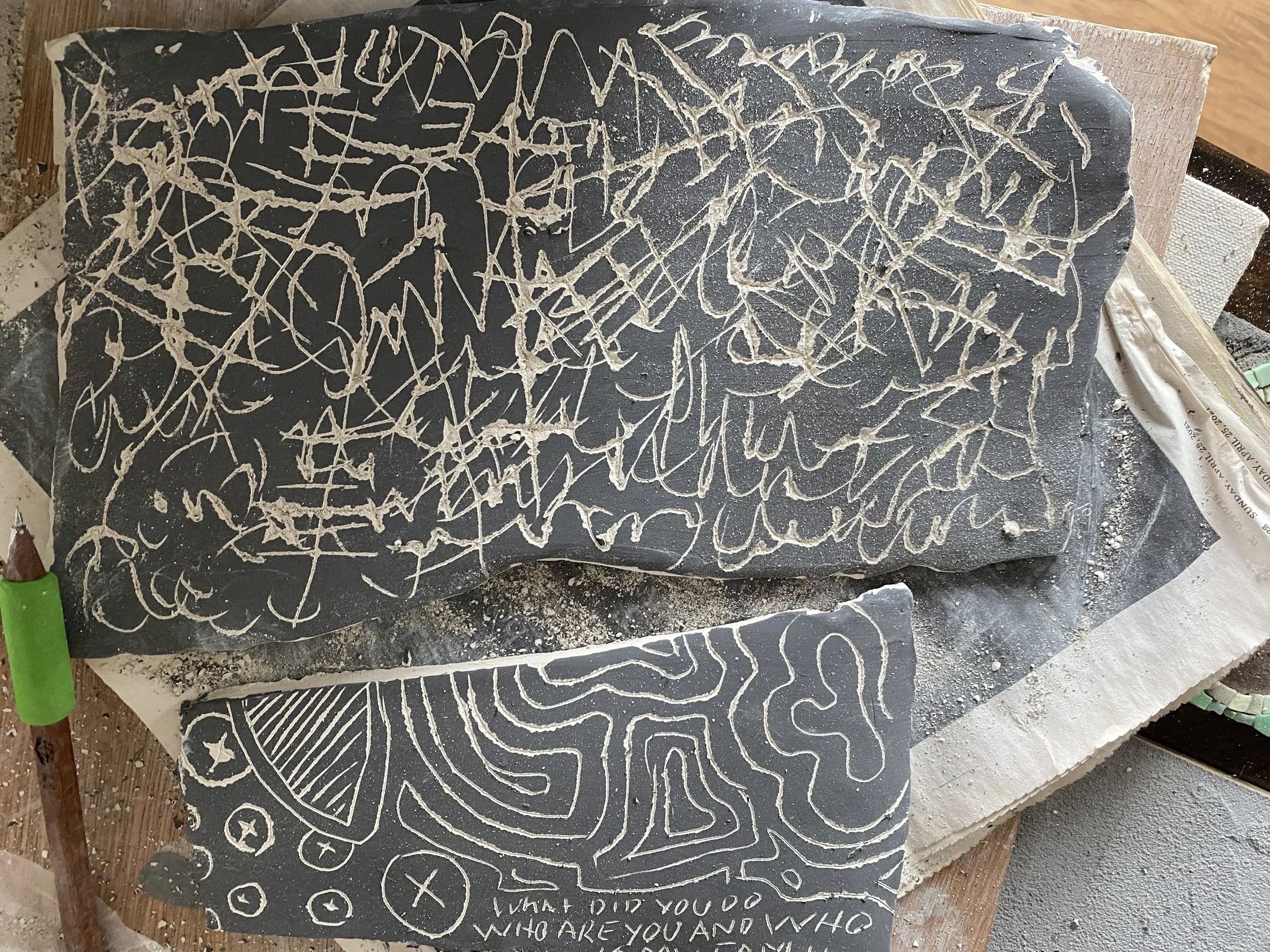
Sgraffito on raw, bone dry clay. Writing drawing on slabs that will break or be broken

Rough sketch idea for 5 x 4 mosaic Ima My Ma
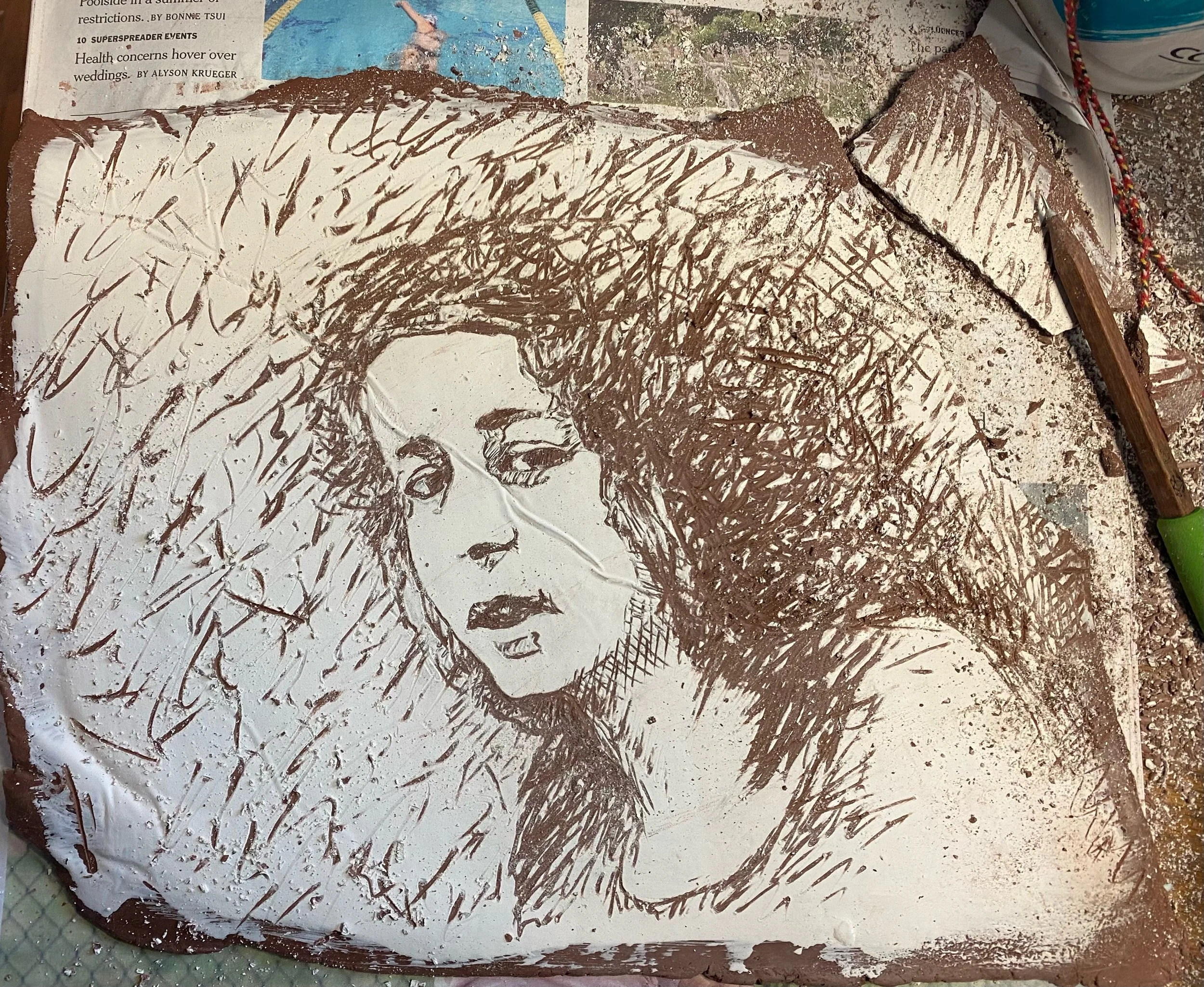
sketch of Gilda in clay
